












Tag: tuttosutozzi.com
TEATRO OLIMPICO Dopo il successo all’Arena e il tour italiano
Umberto Tozzi
TEATRO OLIMPICO
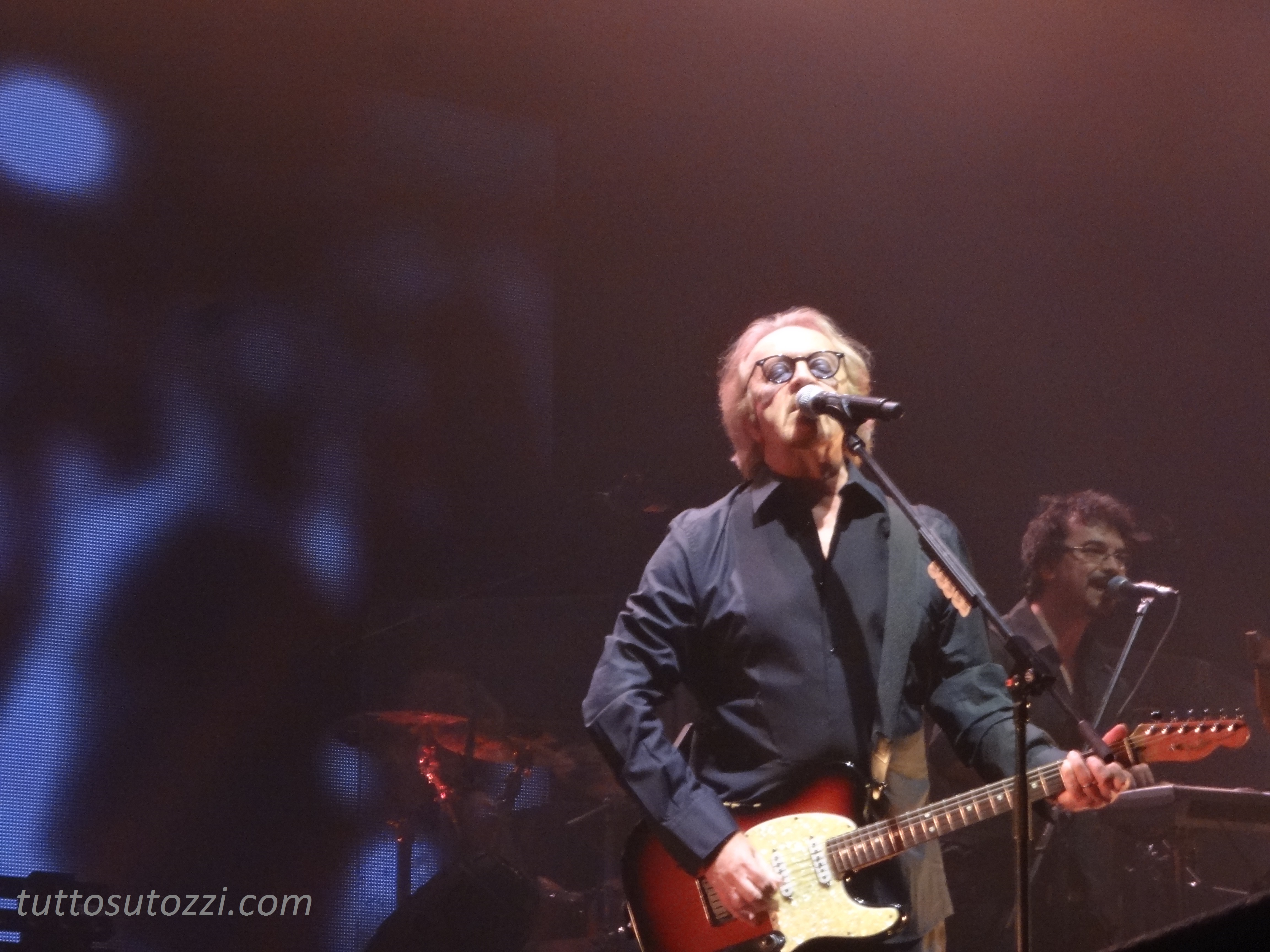
Dopo il successo all’Arena e il tour italiano Quarant’anni che Ti Amo, Tozzi ritorna dal vivo con un nuovo spettacolo nei teatri. Oltre ai brani che
lo hanno reso celebre – Gloria, Si può dare di più, Gli Altri siamo noi, Gente di Mare, Dimmi
di No, Stella Stai, Donna amante mia il cantautore torinese proporrà un intermezzo con alcuni brani del suo repertorio arrangiati in una veste acustica.
Piazza G. da Fabriano 17, oggi alle 21, bigl. da 31
a 59 euro, info teatro limpico.it, 063265991
Per riascoltare la puntata di oggi del “Rosario della sera”

Per ascoltare la puntata di oggi con Umberto Tozzi ospite clicca qui sotto:
Sul Corriere della Sera di oggi
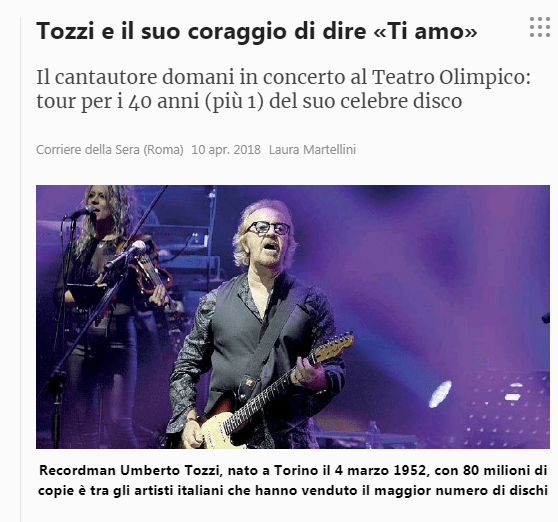
trovate l’intero articolo sul Corriere della Sera di oggi.
Roma, Teatro Olimpico Umberto Tozzi ritorna dal vivo con un nuovo spettacolo
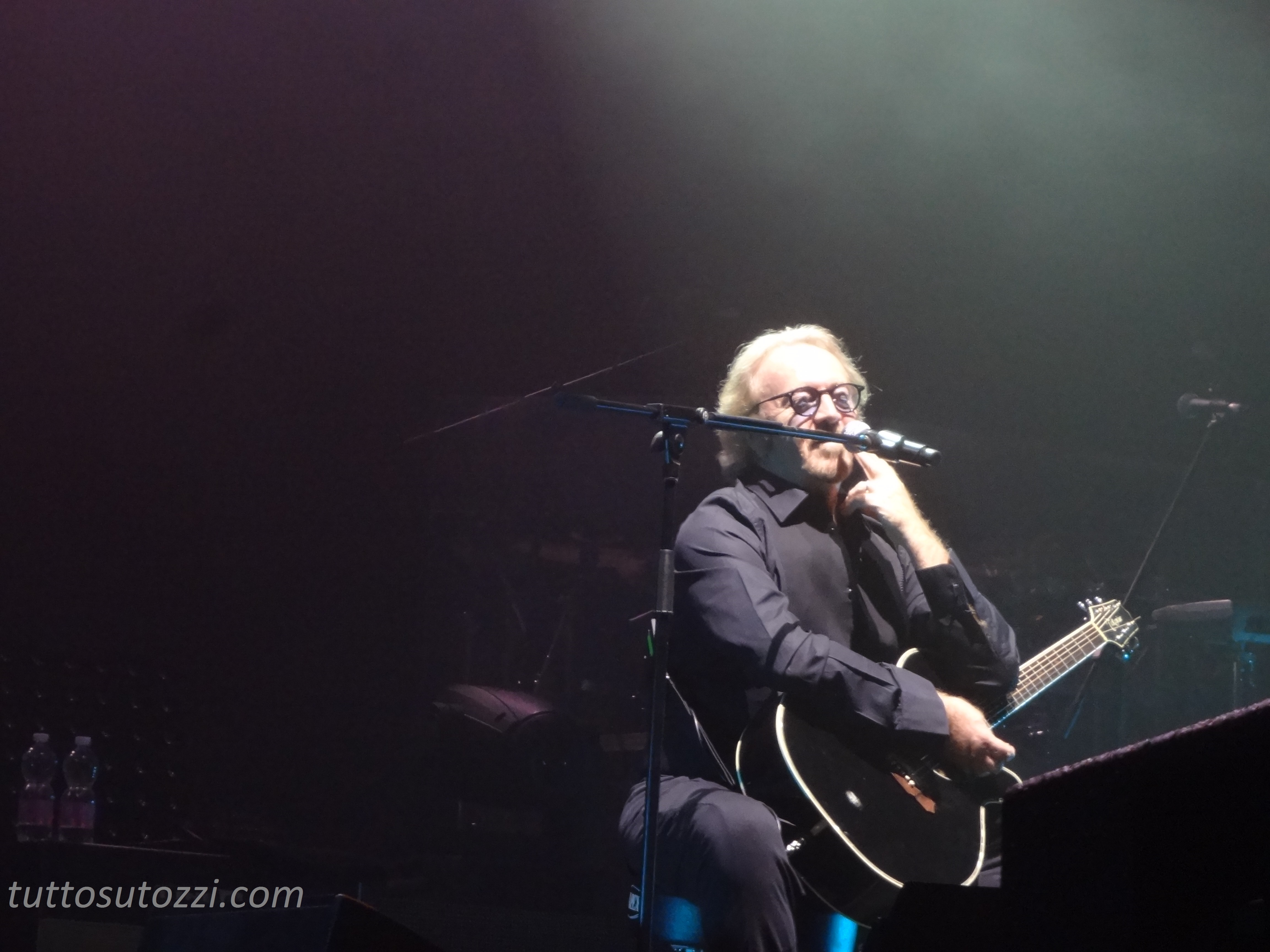
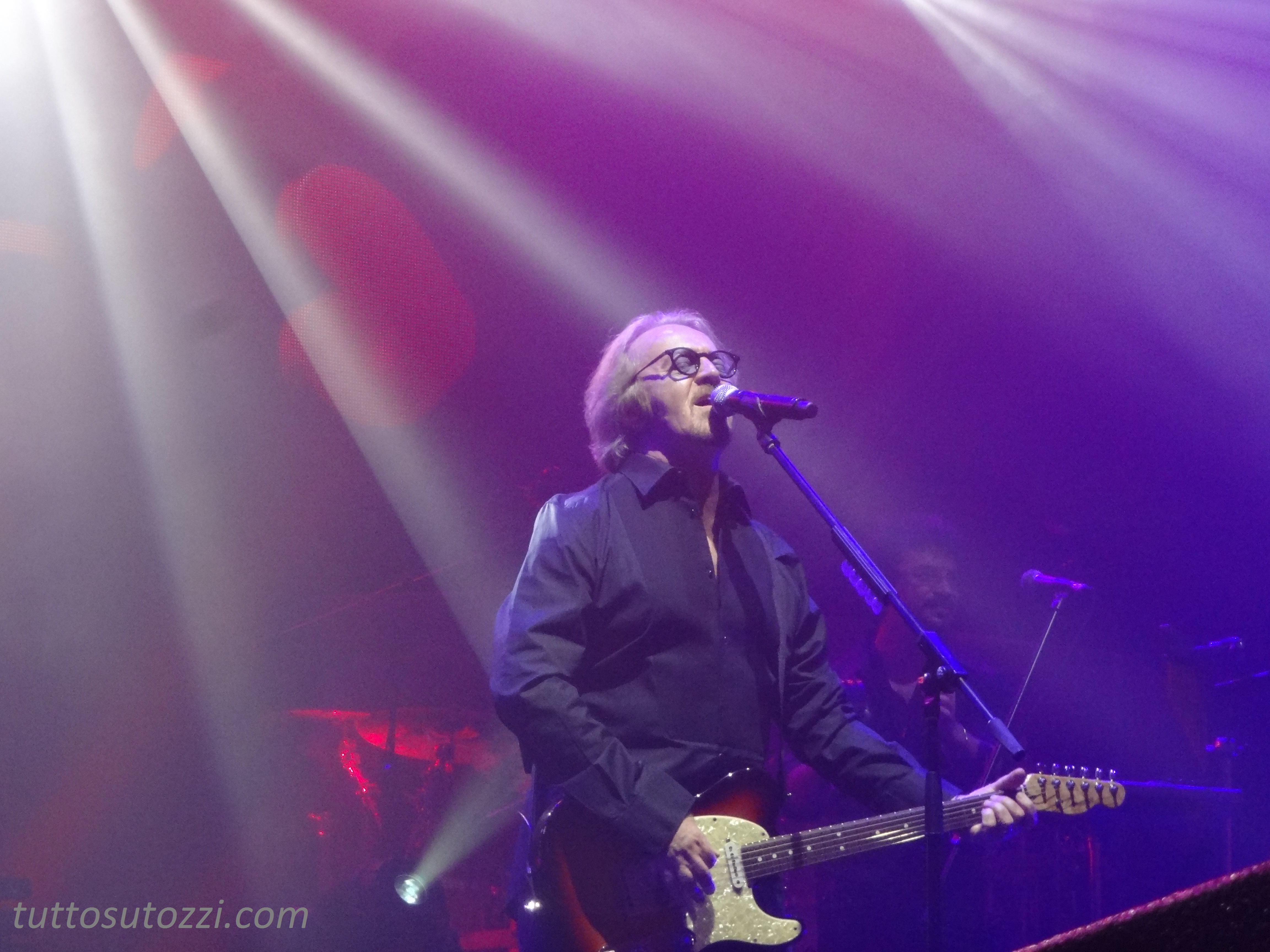
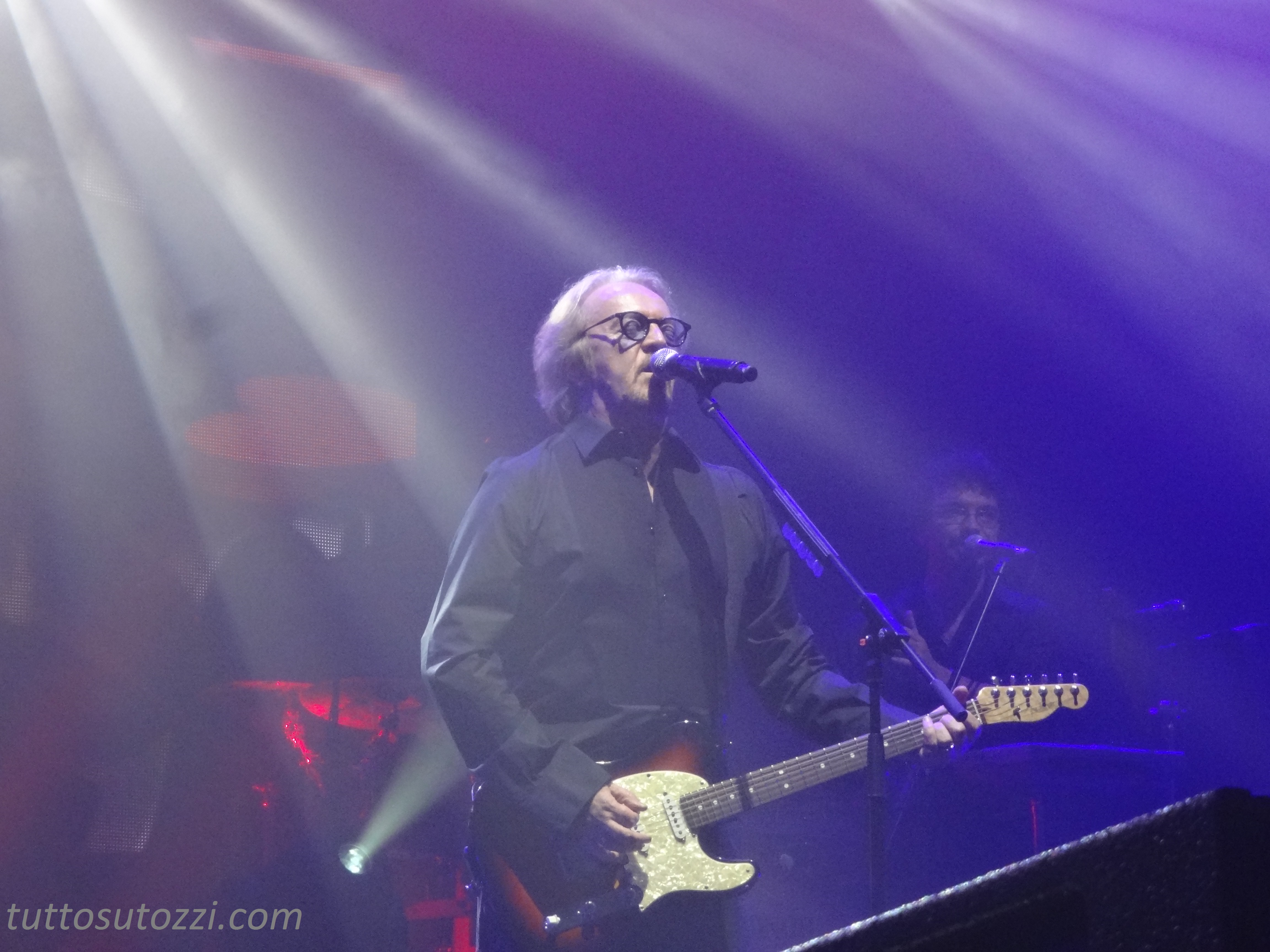
 Dopo il successo dell’evento all’Arena e del precedente tour in tutta Italia “Quarant’anni che Ti Amo”, Umberto Tozzi ritorna dal vivo con un nuovo spettacolo nei teatri storici d’Italia e del mondo, mercoledì 11 aprile 2018 al Teatro Olimpico di Roma.
Oltre a tutti quei brani che lo hanno reso celebre – “Gloria”, “Si può dare di più”, “Gli Altri siamo noi”, “Gente di Mare”, “Dimmi di No”, “Stella Stai”, “Donna amante mia” – il cantautore torinese proporrà un intermezzo dove interpreterà alcuni brani del suo repertorio arrangiati in una veste acustica.
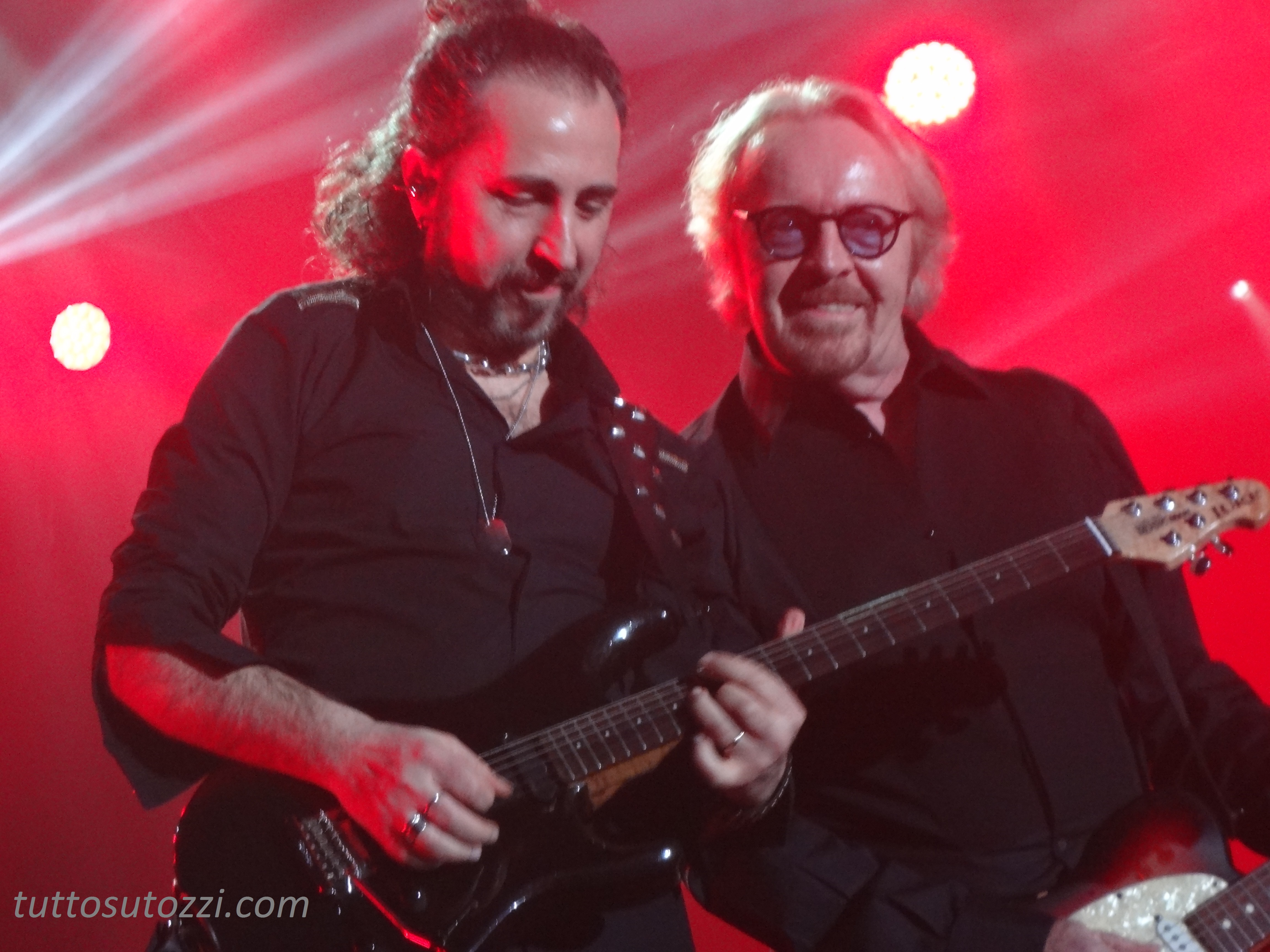
RTL 102.5 è radio partner del tour. Umberto Tozzi sarà accompagnato sul palco da Raffaele Chiatto (chitarre), Gianni D’Addese (tastiere) Giambattista Giorgi (basso), Gianni Vancini (sax), Elisa Semprini (violino) e Riccardo Roma (batteria). Il tour è prodotto e organizzato dalla Concerto Music e prodotto dalla Momy Records.
E’ uscito il 1 dicembre “40 ANNI CHE TI AMO IN ARENA” (prodotto da Momy Records e F&P Group, distribuito Sony Music), il nuovo album live di UMBERTO TOZZI, registrato lo scorso 14 ottobre durante il concerto-evento “40 ANNI CHE TI AMO” all’Arena di Verona. L’evento, che è stata l’occasione per celebrare i 40 anni di carriera di uno dei più grandi cantautori italiani insieme a GIANNI MORANDI, ENRICO RUGGERI, MARCO MASINI, AL BANO, FAUSTO LEALI e RAF.
www.umbertotozzi.com – www.facebook.com/umbertotozziofficial – twitter.com/UmbertoTozzi; www.concerto.net
Biglietti in vendita su Ticketone.it
Organizzazione concerto:Ventidieci
INFO: 0773 414521
Ufficio Stampa Ventidieci:
Maurizio Quattrini tel.338/8485333 maurizioquattrini@yahoo.it

Da «Gloria» a «Ti amo», 40 anni di Tozzi Un concerto il 20 aprile al Creberg

Lunedì 09 Aprile 2018
Dopo il successo in tutta in Italia del «Quarant’anni che Ti Amo» tour culminato all’Arena di Verona a febbraio, Umberto Tozzi ritorna dal vivo nei teatri storici d’Italia e del mondo.
Il tour si concluderà con la data di Bergamo venerdì 20 aprile alle 21. Il cantautore torinese proporrà un nuovo spettacolo dove – oltre a tutti quei brani che lo hanno reso celebre come «Gloria», «Si può dare di più», «Gli Altri siamo noi», «Gente di Mare», «Dimmi di No», «Stella Stai», «Donna amante mia» – ci sarà spazio per interpretazioni più intime ed esecuzioni acustiche chitarra e voce.
Nato come compositore (ha scritto «Io camminerò» per Fausto Leali), nel 1976 ha ottenuto il primo successo da interprete con «Donna amante mia». A «Ti amo» – rimasta sette mesi in classifica – seguono hit straordinarie come «Tu» (1978) e «Gloria» che – ripresa da Laura Branigan – spopola anche nelle charts internazionali. Nel 1987 Umberto vince il Festival di Sanremo insieme a Gianni Morandi ed Enrico Ruggeri, con «Si può dare di più», accompagnata nello stesso anno da «Gente di mare», interpretata insieme a Raf. Passate quattro decadi, il cantante torna a proporre il suo più grande successo, affiancandolo a tutti quei brani lo hanno reso celebre nel mondo, arrangiati in una veste più moderna, insieme ai nuovi brani contenuti nel disco «Ma che spettacolo!», pubblicato a ottobre del 2015. Sul palco, Tozzi sarà accompagnato da Raffaele Chiatto (chitarre), Gianni D’Addese (tastiere) Marco Dirani (basso), Gianni Vanni (sax) e Riccardo Roma (batteria). La ricorrenza è anche celebrata dalla pubblicazione di un doppio album che ripropone molti dei suoi successi registrati dal vivo e due canzoni inedite: «Tu per sempre tu» dello stesso Tozzi e «Le parole sono niente» di Eros Ramazzotti, Claudio Guidetti, Kaballà e Francesco Bianconi. Nel frattempo in radio ha spopolato lo scorso anno la nuova versione di «Ti Amo», registrata a due voci con la cantante statunitense Anastacia, accompagnata da un videoclip girato tra Stoccolma e Milano.
Massimiliano Leva: A distanza di quarant’anni l’autore, Umberto Tozzi, crede che

Massimiliano Leva
A distanza di quarant’anni l’autore, Umberto Tozzi, crede che sia ancora la canzone più originale che abbia mai scritto. E mercoledì farà tappa al teatro Olimpico per celebrare la sua Ti amo, molto più di un tormentone, simbolo di un’epoca e inno d’amore per generazioni.
«Il suono era stupendo da subito, in Francia neppure mi chiesero di tradurla, piaceva l’italiano, quella dichiarazione d’amore così diretta e tant’è, andò benissimo». E pensare che per un banale contrattempo ha rischiato persino di non venire ripubblicata. Il nastro originale registrato in studio, smarrito per caso, poi ritrovato. Una parabola che continua anche oggi: otto milioni di copie vendute e un successo che all’epoca arrivò sino in Sud America oltre che ai primi posti in Francia, Svezia, Svizzera e ovviamente Italia. Quel titolo così diretto e quel sentimento così universale. Quella dichiarazione ripetuta e ripetuta, rivoltata come un calzino dall’estate 1977.
Per celebrare l’anniversario Tozzi ha pubblicato il disco Quarant’anni che ti amo, con una versione speciale rifatta con Anastacia, e che sta portando in tour in un set con versioni dei suoi maggiori successi: da Gloria a Stella stai, da Gente di mare a Donna amante mia. «Non avevo capito subito il potenziale di Ti amo, poi quando la presentai nel settembre del 1977 sul palco del Festivalbar capii cosa stavo cantando e a ben guardare il successo non è ancora finito. Fu un successo strepitoso e grazie anche a una buona dose di fortuna. All’epoca era quasi impensabile vendere oltre confine». La platea è avvisata. Ci sarà da cantare, per tutti: «A Roma mi sento sempre bene. Sul palco mi trovo più a mio agio che in sala di registrazione, mi diverto e dico sempre al pubblico: cantate, cantate con me».
riproduzione riservata ®
That’s A Cover?: Gloria (Laura Branigan / Umberto Tozzi)
That’s A Cover? explores cover songs that you may have thought were originals.

I played a tiny part in unleashing Laura Branigan’s “Gloria” on the world in 1982. Fresh out of college, I landed a paid summer job working in the Atlantic Records promotions department. I spent the summer doing things like going to record stores and hanging up posters. It was a fascinating and fun summer, but it also confirmed that I didn’t want to spend my career trying to figure out what kind of music teenagers would buy. Mostly because it seemed like the senior execs were unhappy, divorced men who smoked and drank too much. Instead, I ended up in law school while another guy my age there became a very major record executive.
Like any good former college radio program director at that time, I had strong opinions about what was “good” music, and what “sucked.” And clearly, disco/dance music sucked. That summer, a number of albums I liked were being promoted to some degree by my department, including Adrian Belew’s Lone Rhino, Genesis’ Three Sides Live, Steve Winwood’s Talking Back To The Night, Jon Anderson’s Animation, and CSN’s Daylight Again. But there were offices filled with men and women promoting these rock releases, and only one guy, Rafael, promoting the dance music. As a result, I ended up working with him a lot, despite my lack of knowledge about – and general contempt for – dance music. I even tried to convince Rafael to remix one of Adrian Belew’s songs for the dance floor, which he briefly considered before thinking better of it.
Hearing “Gloria” for the first time, I dismissed it as a piece of fluffy dance-pop that never would have gotten played once on my college station. That being said, it was catchy for its genre, and Branigan had an excellent voice. It was clear in the office that it was a priority, and we worked hard to promote the hell out of the song. Doug Morris, the big boss at Atlantic then, had helped persuade Branigan to cover “Gloria,” which may explain why it was promoted so heavily. It didn’t hurt that Branigan came by the office a few times that summer, and she was both beautiful and pleasant, even to the grunts like me working the phones.
We were remarkably successful in our endeavors, with the song topping various charts, and earning Branigan a Grammy nomination. But what I didn’t know at the time was that “Gloria” was a cover. And that the original was sung by a man, in Italian.
Umberto Tozzi is an Italian singer-songwriter and producer who began his career at 16, and achieved success as a songwriter, composer, producer, and performer in the mid-1970s. He released the original version of “Gloria,” a fairly conventional pop love song (although addressed to an imaginary woman) in 1979, and it was a hit across Europe:
Later that year Jonathan King, a songwriter, musician, producer (he is credited with discovering and nurturing Genesis, and was the first to add “Ooga Chaka”s to “Hooked on a Feeling”), and – the world later learned – a child sexual abuser, translated the song into English, releasing his own version:
Several translated versions came out before Branigan’s, including ones in Czech and Estonian. Even Umberto Tozzi semi-covered his own song, releasing an English version using King’s translated lyrics:
Branigan had started singing as the lead in her high school production of The Pajama Game, before moving to New York to study singing, and, of course, work as a waitress. She joined a band, and even got a gig backing Leonard Cohen.
Branigan met and impressed legendary manager Sid Bernstein, who agreed to work with her, and after auditioning for the at least equally legendary Ahmet Ertegun, Atlantic Records signed her in 1979. She released a few singles to little notice, before her debut album, Branigan, came out in 1982. Somehow, the experts in the big offices at Atlantic decided to release a not-“Gloria” balladas the first single, and it peaked at 69 on the charts. But next up was the song that was to become Branigan’s signature.
Originally, she and her producer Jack White (the German one, not the one from The White Stripes), and arranger Greg Mathieson, who had worked on the original, tried to translate it into a love song titled “Mario.” But they weren’t happy, and the song was reimagined by lyricist Trevor Veich (and likely an uncredited Branigan) as a song about a girl, Gloria, who as Branigan said, was “running too fast for her own steps.” Those lyrics, Branigan’s voice, and a new, more dance-friendly production (and the hard work of many promotion people way more talented than me), led to the success of this version of “Gloria.”
Since then, there have been numerous covers of the song, in various languages, including English. Tozzi himself even released a cover of Branigan’s version.
In the early and mid-1980s, Branigan had more synth-pop hits, including an English cover of the French song “Solitaire” (which was the first major hit for Diane Warren), “How Am I Supposed to Live Without You,” (the first major hit for its co-writer, Michael Bolton), another Tozzi song, “Ti Amo,” and her biggest hit, “Self Control.” By 1994, changing musical tastes, and the illness of her husband, led Branigan to retire from the industry. While she occasionally dipped her toes back into performance, she never really returned. In 2004, at age 52, Branigan died in her sleep of an undiagnosed brain aneurysm.
You can get the best of Umberto Tozzi here, and the best of Laura Branigan, here.
 TUTTO SU TOZZI - UMBERTO TOZZI FAN'S BLOG